

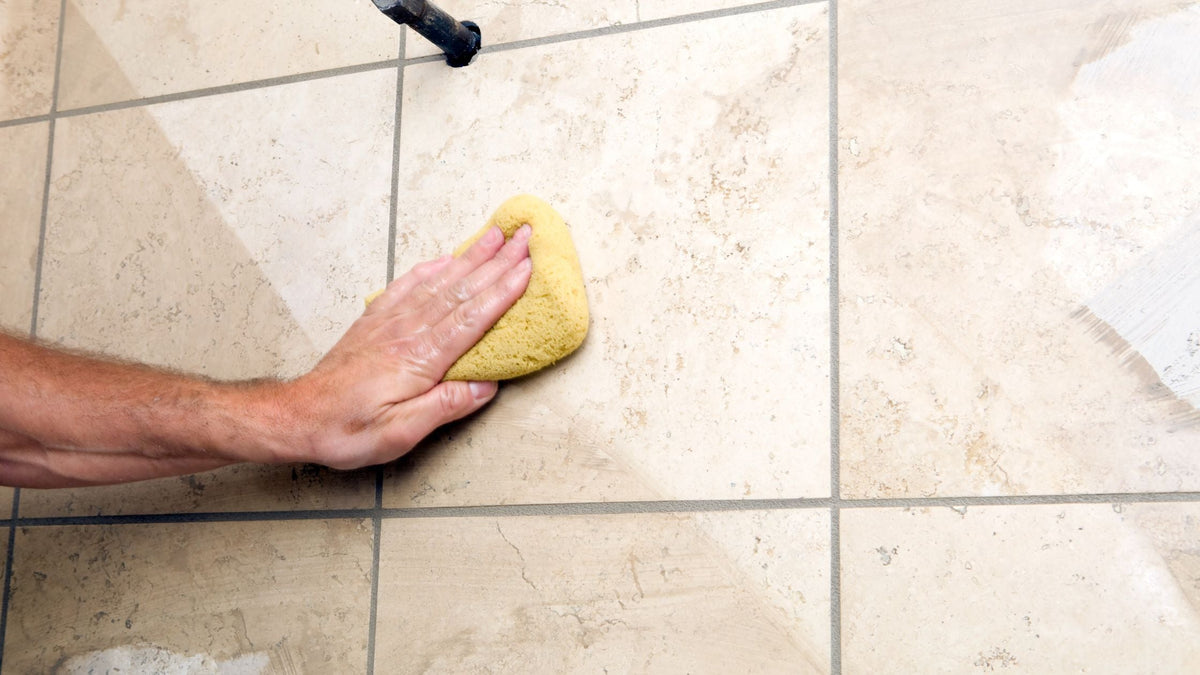
How to Clean Bathroom Grout and Remove Stubborn Mould
You can have sparkling shower glass, freshly cleaned tiles and polished tapware, but if the grout is dark, stained or covered in mould, the whole bathroom can still look dirty.
Bathroom grout is one of those areas that can go from looking perfectly fine to decidedly questionable surprisingly quickly. The combination of moisture, warmth, soap residue and poor ventilation makes bathrooms particularly challenging to keep clean, and grout lines often show the effects first.
If you've noticed black or discoloured patches appearing between your shower tiles, simply wiping over them during your weekly bathroom clean may not be enough.
The trick is understanding what you're actually dealing with.
Everyday grime, soap scum, mineral deposits and mould require different approaches. Using the right cleaner for the problem can save a lot of unnecessary scrubbing — and help you get a much better result.
In this guide, we'll explain how to clean bathroom grout, how to tackle mouldy shower grout, what causes grout to turn black, which cleaning mistakes to avoid and how to maintain your bathroom afterwards to help stop the problem coming straight back.
For bathrooms affected by visible mould, Bushby's Delete Mould can be used as the initial mould treatment. Once the mould has been dealt with, products such as Shower Pro, Housemaid or Squeak can become part of your ongoing bathroom cleaning routine depending on the surfaces and type of build-up you're cleaning.

Why Does Bathroom Grout Get So Dirty?
Grout fills the spaces between tiles and creates the finished tiled surface we see throughout bathrooms.
Unfortunately, many traditional grout products are porous.
That means they can gradually collect moisture and residue from the bathroom environment.
Think about what happens inside the average shower every day.
Hot water creates steam and humidity. Shampoo, conditioner, soap and body wash run down the walls. Body oils and dirt are rinsed away. Depending on your water supply, minerals can also be left behind as water evaporates.
Then the shower is turned off and the bathroom is left to dry.
Repeat that process hundreds of times and it's easy to understand why grout can become discoloured.
Common causes include:
-
Soap scum
-
Body oils
-
Shampoo and conditioner residue
-
Dirt
-
Hard water minerals
-
Poor ventilation
-
Persistent moisture
-
Mould and mildew
The lower sections of a shower often become dirty first because they're exposed to the greatest amount of water and product residue.
Corners, niches, grout joints and areas around silicone can be particularly problematic because water can sit there longer.

Why Does Shower Grout Turn Black?
Black grout isn't always simply "dirt".
If black, dark green or grey spotting is appearing in damp areas of your bathroom, mould may be involved.
Bathrooms offer mould several things it likes: moisture, humidity and organic material to grow on.
Poor airflow can make the problem worse.
A bathroom that stays damp for hours after every shower gives surfaces far less opportunity to dry properly. That's why mould commonly appears around shower grout, silicone, ceiling areas, window frames and other places where condensation regularly collects.
If the grout is simply dirty, a normal bathroom cleaner may be sufficient.
If you're dealing with visible mould, however, it makes more sense to use a product specifically designed for mould treatment.
Step 1: Work Out What You're Cleaning
Before reaching for the nearest bottle under the sink, take a closer look at the grout.
Ask yourself what the build-up looks like.
General grey or brown grime?
This may simply be accumulated dirt, soap residue and oils.
White, crusty deposits?
Hard water minerals or calcium build-up may be contributing.
Black or dark spotting?
Mould may be present.
Dark staining that doesn't change after cleaning?
The grout itself may be permanently stained or deteriorated.
This distinction matters because there isn't one cleaner that's automatically the best solution for every bathroom problem.
At Bushby, we manufacture different bathroom products for different cleaning jobs. Rather than expecting one chemical to do absolutely everything, choosing the cleaner according to the type of build-up and surface generally gives you a better result.
Step 2: Clear and Prepare the Shower
Before deep cleaning your bathroom grout, remove anything that will get in your way.
Take out:
-
Shampoo and conditioner bottles
-
Soap
-
Razors
-
Shower caddies where possible
-
Bath mats
-
Children's bath toys
-
Removable accessories
Give the area a quick rinse or remove loose hair and debris.
Opening windows and turning on the exhaust fan is also a good idea to increase ventilation while you're cleaning.
Always follow the directions and safety information on the cleaning product you're using, including recommended personal protective equipment.
And one rule is worth repeating:
Never mix cleaning chemicals.
Combining different cleaning products can produce dangerous reactions and gases. Completely rinse one product away before moving on to another stage of cleaning.

Step 3: Treat Mouldy Grout with Delete Mould
If mould is the main reason your grout looks black or dirty, this is where Delete Mould comes in.
Delete Mould is Bushby's ready-to-use mould controller and inhibitor designed to tackle mould on suitable surfaces.
It can be used on bathroom areas including suitable shower surfaces and grout.
For indoor applications, apply Delete Mould according to the product directions and allow approximately 20 minutes dwell time.
Giving a mould cleaner time to work is important. One of the most common cleaning mistakes is spraying a product and immediately wiping it away.
After the required dwell time, rinse the area thoroughly.
For stubborn areas, additional treatment may be required.
Always test in an inconspicuous area first if you're unsure about surface compatibility.
Where You Shouldn't Use Delete Mould
Delete Mould contains sodium hypochlorite and isn't suitable for every bathroom material.
Do not use Delete Mould on marble, natural stone, laminate or terrazzo.
This is particularly important in modern bathrooms where natural stone tiles, stone vanities and specialty finishes are increasingly common.
If you aren't sure what your tiles or surrounding surfaces are made from, identify the material before applying any cleaning product.
This simple step can prevent expensive damage.
What About Mould on Shower Silicone?
Here's where expectations need to be realistic.
Silicone around showers and baths can become heavily stained by mould.
A mould treatment may significantly improve surface mould and staining, but once mould has penetrated deeply into old or deteriorated silicone, cleaning won't necessarily make it look brand new again.
Sometimes the problem isn't the cleaner.
The silicone has simply reached the point where replacement is the best option.
Signs silicone may need replacing include:
-
Permanent black staining
-
Cracking
-
Peeling
-
Gaps between the silicone and surface
-
Silicone pulling away
-
Persistent mould deep within the material
Cleaning can maintain good silicone, but it can't repair physically deteriorated sealant.

Step 4: Gently Agitate Stubborn Grout
Depending on the amount of build-up, some grout may benefit from gentle agitation.
A small grout brush or suitable non-scratch cleaning brush allows you to work along individual grout lines.
You don't necessarily need to attack the grout with maximum force.
Overly aggressive scrubbing can gradually damage grout, especially if it's already old or deteriorating.
Instead, let the cleaning product do as much of the work as possible.
Work systematically from one section to the next and pay particular attention to:
-
Tile intersections
-
Shower corners
-
Lower wall grout
-
Around taps and fixtures
-
Shower niches
-
Areas close to silicone
Then rinse thoroughly.
Step 5: Rinse Everything Properly
Don't underestimate rinsing.
Once you've treated mould or loosened grime, thoroughly rinse the surface with clean water.
This removes loosened contaminants and remaining cleaning product.
It's particularly important if you're planning to use a different cleaning product afterwards.
Never layer multiple bathroom chemicals over one another.
If you've used Delete Mould, finish that cleaning process completely and rinse the area thoroughly before moving on to your regular bathroom cleaner.
Step 6: Choose the Right Aftercare Cleaner
Once you've dealt with mould, ongoing maintenance becomes the important part.
This is where Shower Pro, Housemaid or Squeak can help — but they're not interchangeable.
The best choice depends on your bathroom surfaces and the type of build-up you're trying to remove.
Shower Pro: For Hard Water, Calcium and Mineral Build-Up
If your bathroom has cloudy shower glass, stubborn mineral deposits or calcium build-up, Shower Pro is the product we'd look at first.
Shower Pro is an acid-based scale remover developed to tackle hard water and mineral build-up across suitable bathroom surfaces.
It can be used on areas such as:
-
Shower glass
-
Tiles
-
Grout
-
Basins
-
Tapware
-
Toilets and urinals
For an initial deep clean, Shower Pro can be used neat according to the product directions. For ongoing cleaning it can be diluted.
A standard working dilution is:
500ml spray bottle: 50ml Shower Pro concentrate, then top with water.
750ml spray bottle: 75ml Shower Pro concentrate, then top with water.
Always rinse surfaces thoroughly and don't allow the product to dry on the surface.
Because Shower Pro is acidic, it isn't the cleaner we'd choose for acid-sensitive natural stone.

Housemaid: The Stone-Safe Bathroom Option
Have marble or natural stone in your bathroom?
This changes your cleaning routine.
Acidic bathroom cleaners and bleach-based products may be unsuitable for these surfaces, so you need to choose products carefully.
Housemaid is Bushby's pH 7 bathroom cleaner and is our gentler option for bathrooms containing natural stone and marble.
It can be used across areas including:
-
Shower glass
-
Tiles
-
Bathroom floors
-
Sinks
-
Tapware
-
Vanities
-
Toilets
-
Natural stone
-
Marble
Housemaid is concentrated, with a standard spray-and-wipe dilution of:
500ml bottle: 25ml concentrate, then top with water.
750ml bottle: 37.5ml concentrate, then top with water.
One 500ml bottle of Housemaid concentrate can make approximately 20 x 500ml working spray bottles, making it a practical choice for regular bathroom maintenance.
If you've invested in marble or natural stone, checking cleaner compatibility before use should become part of your normal cleaning routine.

Squeak: Heavy-Duty Bathroom Cleaning
For bathrooms that need more cleaning power against everyday grime and soap build-up, Squeak is another option.
Squeak is Bushby's heavy-duty plant-based bathroom cleaner with a thick gel formula designed to give the product good surface contact.
Its concentrated formula means you only need a small amount for regular cleaning.
For spray-and-wipe applications:
500ml bottle: approximately 12ml of Squeak concentrate, then top with water according to the directions.
Squeak is useful for heavy-duty bathroom cleaning, but it should not be used on natural stone.
Again, matching the product to the surface matters.
Which Bushby Bathroom Cleaner Should I Use?
A simple way to think about it is:
Visible mould on suitable bathroom surfaces:
Start with Delete Mould.
Hard water, calcium and mineral deposits:
Use Shower Pro on compatible surfaces.
Marble, natural stone or a pH-neutral bathroom clean:
Choose Housemaid.
Heavy-duty everyday bathroom grime and soap residue:
Consider Squeak on compatible surfaces.
Different bathroom problems have different chemistry behind them, so using a product designed for the specific job is generally more effective than expecting one cleaner to solve everything.
What If My Grout Still Looks Dirty After Cleaning?
Sometimes grout remains discoloured even after you've cleaned it thoroughly.
There are several possible reasons.
Permanent Staining
Older grout can absorb pigments and become permanently discoloured.
Damaged Grout
Cracked, crumbling or missing grout can't be restored with cleaning chemicals.
It may need repair or replacement.
Mineral Deposits
If the discolouration is white and crusty rather than black, you may be dealing with mineral build-up rather than mould.
A product such as Shower Pro may be more appropriate on compatible surfaces.
The Original Grout Colour Has Changed
Years of use can alter the appearance of grout, particularly in high-traffic or constantly wet areas.
Cleaning can remove surface contamination, but it can't necessarily return damaged or permanently stained material to its original appearance.
Knowing when you're dealing with a cleaning problem versus a maintenance or repair problem can save a lot of wasted effort.
Common Mistakes When Cleaning Bathroom Grout
Mixing Cleaning Products
This is the big one.
Don't mix bathroom chemicals in an attempt to create a "stronger" cleaner.
You can create dangerous chemical reactions.
Use one product at a time and follow its label directions.
Using the Wrong Product on Natural Stone
Beautiful marble and natural stone bathrooms need extra care.
Check compatibility before using acidic or bleach-based cleaners.
Housemaid is Bushby's pH-neutral option for stone-safe bathroom maintenance.
Scrubbing Too Aggressively
A little agitation can help, but grout isn't indestructible.
If it's already deteriorating, aggressive scrubbing can make things worse.
Not Giving Products Time to Work
Spray, wipe, done?
Not always.
Some cleaning products need dwell time to break down the problem they're designed to target.
Follow the product directions rather than immediately wiping everything away.
Forgetting to Rinse
Cleaning isn't finished until you've removed loosened grime and residual product.
Rinse thoroughly where the product directions require it.
Ignoring Ventilation
You can have the cleanest shower in Queensland on Monday and still create ideal mould conditions by Friday if the bathroom remains wet and humid for hours after every shower.
Ventilation matters.

A Simple Weekly Shower Grout Routine
Once you've completed the deep clean, maintenance doesn't need to be complicated.
After showering, squeegee excess water from glass and tiles where practical.
Keep the bathroom ventilated until excess humidity has cleared.
Once a week, clean shower surfaces with the appropriate Bushby bathroom cleaner for your surfaces.
Check corners, grout and silicone while you're cleaning. If you spot mould beginning to appear, address it early rather than waiting until it spreads across the shower.
Every few months, take a closer look at areas that don't get much attention during the weekly clean, including shower tracks, exhaust fans, behind bottles and around fixtures.
A few minutes of prevention is much easier than attacking years of accumulated bathroom grime.
Bathroom Grout Cleaning FAQs
What is the best way to clean bathroom grout?
The best method depends on what's making the grout dirty. Everyday soap scum and grime can generally be cleaned with an appropriate bathroom cleaner, while visible mould should be treated with a dedicated mould product such as Delete Mould on compatible surfaces.
How do you remove black mould from shower grout?
For mould on suitable shower grout, apply Delete Mould according to the directions, allow the recommended indoor dwell time of approximately 20 minutes and rinse thoroughly. Repeat treatment may be required for stubborn areas.
Why does mould grow between shower tiles?
Bathroom grout is regularly exposed to moisture, warmth, soap residue and humidity. When surfaces stay damp for extended periods, particularly in poorly ventilated bathrooms, conditions can encourage mould growth.
How do you keep shower grout clean?
Regularly remove excess water, ventilate the bathroom after showering and clean the shower with an appropriate bathroom cleaner before heavy grime accumulates. Cleaning grout routinely is much easier than waiting for significant build-up.
What should I use on marble bathroom grout?
Take particular care around marble and natural stone. Delete Mould and acidic cleaners such as Shower Pro aren't appropriate for these surfaces. Bushby's pH 7 Housemaid is the better option for routine cleaning of compatible marble and natural stone bathroom surfaces.
Can I use Shower Pro after Delete Mould?
They should never be mixed. Where both products are appropriate for the surface and cleaning problem, complete the Delete Mould treatment first and rinse the area extremely thoroughly. Shower Pro should only be used separately and according to its directions.
What's the difference between cleaning mould and cleaning soap scum?
Mould is biological growth, whereas soap scum is residue created from soap, body oils and minerals. They can appear in the same shower, but different products may be required to address each problem effectively.
How often should bathroom grout be cleaned?
There isn't one schedule for every home. A heavily used family bathroom in a humid environment may require more frequent cleaning than a well-ventilated guest bathroom. Regular weekly bathroom maintenance and addressing visible build-up early can reduce the need for aggressive deep cleaning.
Clean the Problem — Then Maintain the Result
The secret to cleaner bathroom grout isn't endless scrubbing.
It's identifying what's actually making the grout dirty and choosing the right approach.
If you're dealing with visible mould on compatible bathroom surfaces, Delete Mould provides the targeted first step.
After that, establish an ongoing cleaning routine based on your bathroom.
Choose Shower Pro where hard water and calcium build-up are the challenge, Housemaid when you need a pH-neutral cleaner suitable for marble and natural stone, or Squeak for heavy-duty bathroom cleaning on compatible surfaces.
Most importantly, don't forget the part no cleaning product can do for you: keep the bathroom ventilated, remove excess moisture and don't allow everyday grime to build up for months at a time.
A little ongoing maintenance can make the difference between a quick weekly clean and spending your Saturday morning scrubbing grout with a toothbrush.
And we're fairly sure you've got better things to do.




Leave a comment
This site is protected by hCaptcha and the hCaptcha Privacy Policy and Terms of Service apply.